

Where Do Bats Roost in a House?
· 2 min read
On this page
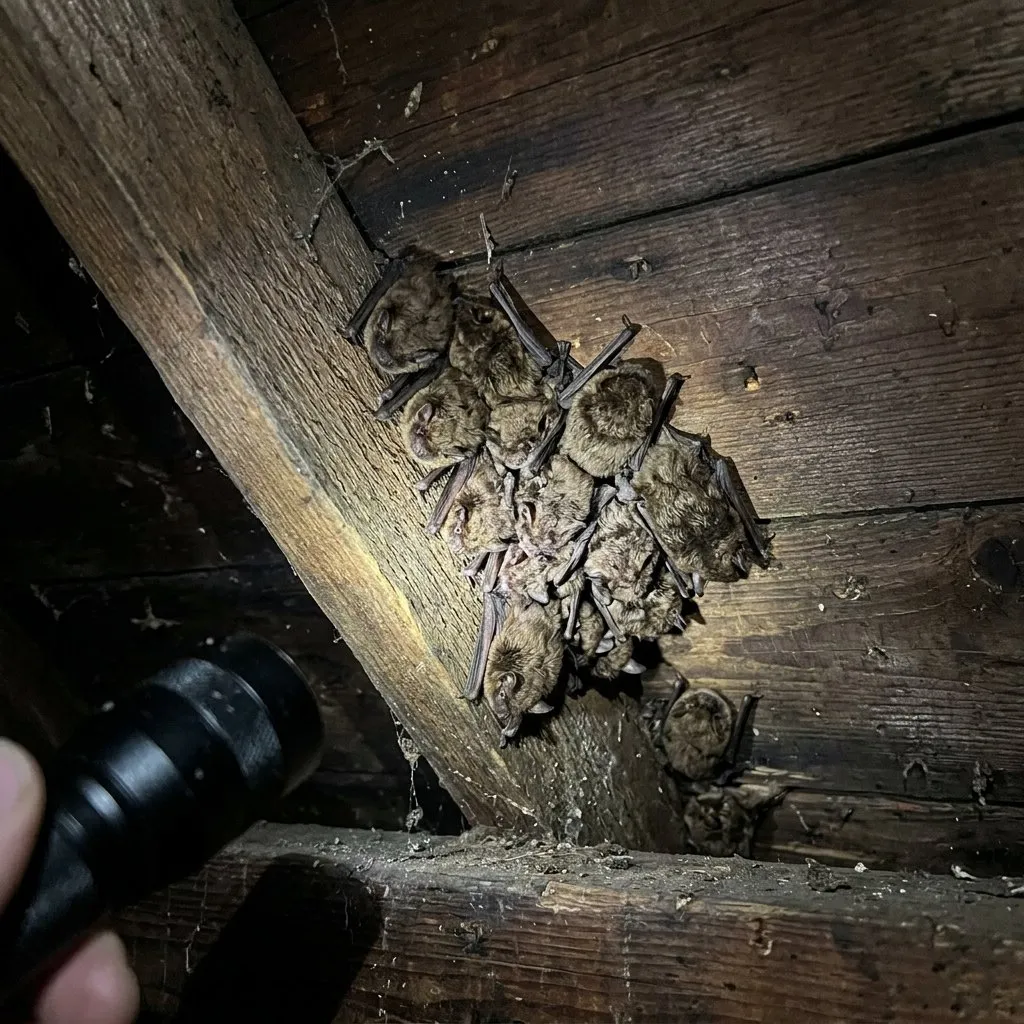
Bats can roost in many common places around your home. Usually, the quieter and more out of the way, the better. Like most animals that move into houses, bats avoid people. Areas with the least human activity are where bats like best to roost and raise their young.
This guide covers where bats roost, how they get in, the signs you have bats and how they are removed.
Where Do Bats Roost Around a Home?
These are the places Jarrod’s technicians find bats most often:
- Attics. A warm, dark attic with little traffic is ideal for a colony.
- Soffits and eaves. Gaps where the roof meets the wall lead into protected spaces.
- Wall voids. Bats can live in the space between the inside and outside walls.
- Chimneys. An uncapped chimney is an easy way in.
- Behind shutters and siding. Loose shutters and gaps behind siding make good daytime roosts.
How Do Bats Get Inside?
Bats do not chew their way in. They use openings that are already there, and they need very little room. Many bats can fit through a gap about the size of a thumb.
A window with a torn or missing screen is an open invitation. Gaps around doors and vents are also large enough for bats to get in. Other common entry points are loose flashing, gaps at the roofline, damaged soffit vents and openings where pipes and wires enter the house.
What Are the Signs of Bats in the House?
- Droppings, called guano, that pile up below the roost or stick to walls and windows.
- Dark, greasy stains around the gaps bats use to get in and out.
- Scratching or squeaking in the attic or walls, especially at dusk and dawn.
- Bats flying out of the roofline around sunset.
- A strong, musty smell from built-up guano.
Why Should You Not Remove Bats Yourself?
Bat guano can grow a fungus that causes histoplasmosis, a lung infection, when the dust is disturbed. Bats can also carry rabies. Never touch a bat with bare hands.
There is a second reason to leave it to a professional. Bats are protected wildlife. They are usually removed by exclusion, which lets the bats fly out and keeps them from coming back in, rather than by trapping or killing them. Timing matters too, because young bats that cannot fly yet must not be sealed inside during the summer pup season.
How Are Bats Removed?
A wildlife technician inspects the house to find every place the bats use. One-way exclusion devices go over the main openings, so bats can leave at night but cannot get back in. Once the bats are gone, the technician seals the openings so they stay out.
If you think you have bats, call Jarrod’s at (706) 841-9912. We have removed wildlife from homes across Georgia and Alabama since 2009, and the inspection is free.